
Stoning Hammer
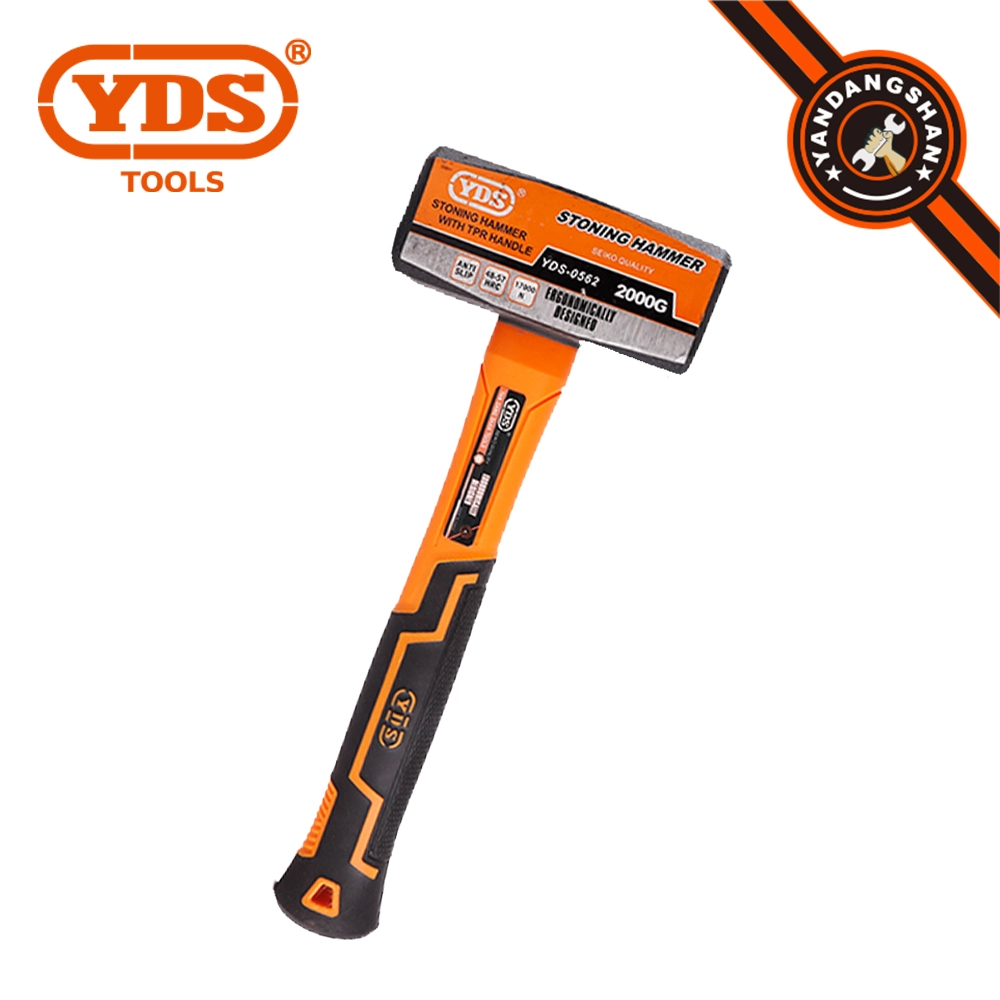
Uses of a Stoning Hammer
1. Stone Shaping
It is used to shape and carve stones for construction, sculpture, or decorative work. The dual-face design allows for versatile use in shaping rough stones.
2. Masonry Work
It is ideal for breaking and shaping stone materials, such as granite, marble, or limestone, in masonry projects.
3. Chiseling and Detailing
One face of the hammer is usually flat for general striking, while the other side is pointed or chiseled for detailed work, such as carving intricate designs or smoothing edges.
4. Splitting Stones
Can be used in splitting stones into smaller, more manageable pieces for construction or landscaping.
5. Paving and Tile Setting
Helps in precision cutting and shaping of stone tiles or pavers during outdoor construction and tile setting.
Advantages of a Stoning Hammer
1. Dual-Face Design
The hammer has a flat face for general striking and a chiseled or pointed face for more detailed stone shaping, thus versatile for both rough work and fine details.
2. Precision and Control
Provides better control for precise strikes, especially useful for detailed stone carving or shaping tasks in masonry and sculpture.
3. Durability
The stoning hammer is constructed with a strong steel head and sturdy handle to withstand heavy use in tough materials like stone and granite. Ergonomic Handle: Many stoning hammers are designed with ergonomic handles that reduce vibration and improve comfort during extended use. Improved Efficiency: The design of the hammer enables one to work more efficiently and in control, hence giving way to faster tasks such as chiseling, splitting, and shaping stones.
4. Versatility
A multi-purpose tool for masonry, sculpture, landscaping, and paving, among other applications.
5. Safety and Precision
The solid construction and well-designed striking faces minimize the possibility of accidental damage to workpieces while providing safe, controlled strikes.